

Buying a home is one of the biggest financial decisions you’ll ever make. If you’re exploring mortgage options in Indiana, you may have come across the term tracker mortgage. At first glance, it might sound technical or even a bit confusing. But once you understand how it works, you might realize that it could be a useful option depending on your financial goals and risk tolerance.
In this guide, we’ll walk through everything you need to know about tracker mortgages in Indiana—what they are, how they work, their benefits and risks, and whether they might be right for you. Think of this as a friendly conversation designed to help you make a more confident decision about your future home loan.
Table of Contents
What Is a Tracker Mortgage?
This mortgage is a type of variable-rate mortgage where the interest rate follows (or “tracks”) an external benchmark rate. This benchmark is usually something like the Federal Reserve benchmark rate, prime rate, or another widely recognized interest rate index.
Instead of locking in one fixed rate for the entire loan term, your mortgage interest rate moves up or down based on the benchmark it tracks.
For example:
- If the benchmark rate goes up, your mortgage interest rate increases.
- If the benchmark rate goes down, your mortgage interest rate decreases.
This means your monthly mortgage payment can change over time.
For homebuyers in Indiana, this mortgages may offer lower starting rates compared to fixed-rate mortgages, but they also introduce more uncertainty.
How Tracker Mortgages Work in Indiana
While this mortgages are more common in some countries, versions of variable-rate mortgages tied to benchmark rates exist in the United States as well.
Here’s a simplified breakdown of how they work:
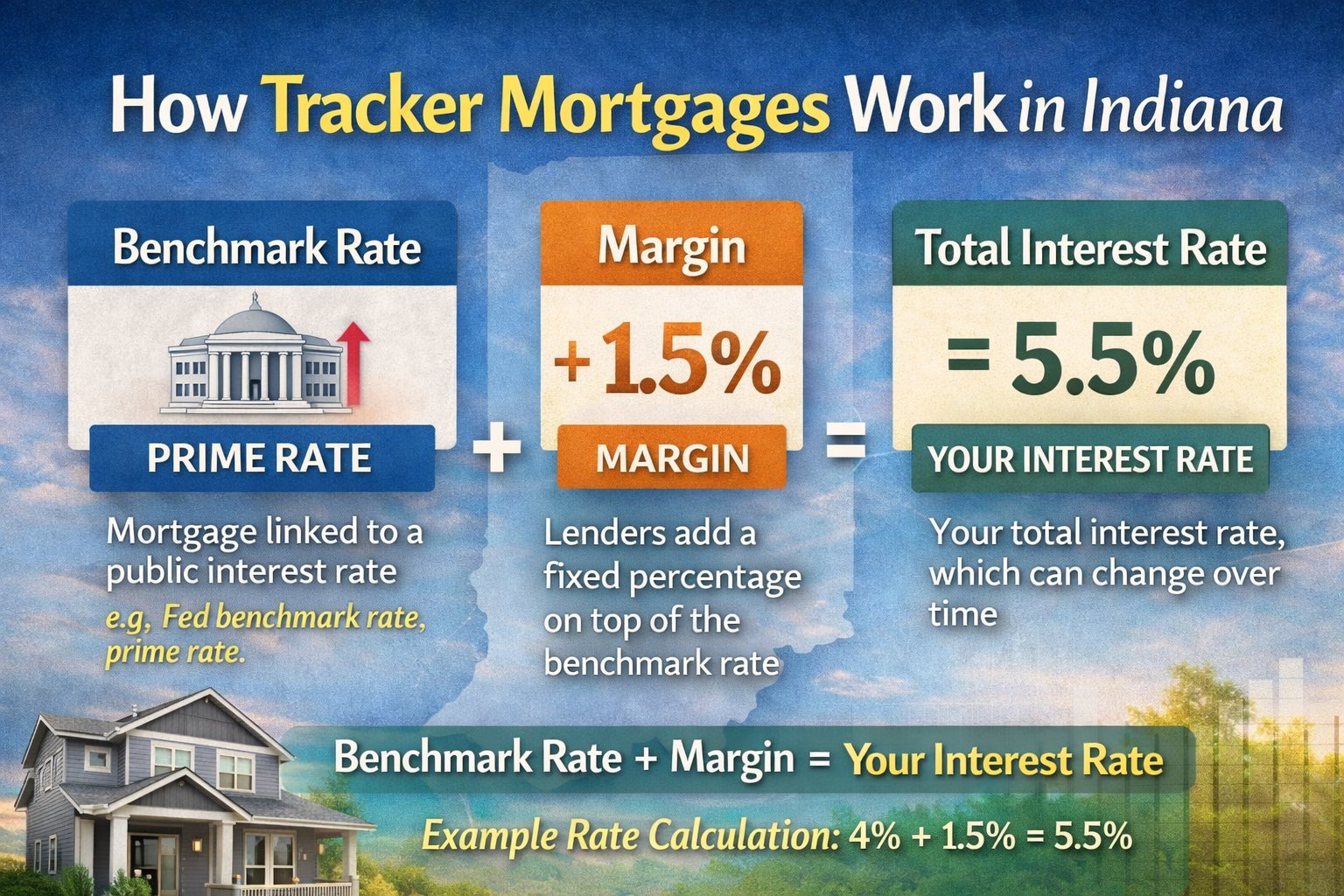
- Benchmark Rate
The mortgage is linked to a public interest rate such as the prime rate or SOFR (Secured Overnight Financing Rate). - Margin
Lenders add a fixed percentage on top of the benchmark rate. This is called the margin. - Total Interest Rate
Your mortgage rate equals: Benchmark Rate + Margin = Your Interest Rate
Example:
- Benchmark rate: 4%
- Margin: 1.5%
Your mortgage interest rate would be 5.5%.
If the benchmark rises to 5%, your new mortgage rate becomes 6.5%.
Tracker Mortgage vs Fixed-Rate Mortgage
When considering a tracker mortgage in Indiana, it helps to compare it with the traditional fixed-rate mortgage.
| Feature | Tracker Mortgage | Fixed-Rate Mortgage |
|---|---|---|
| Interest Rate | Changes with benchmark | Stays the same |
| Monthly Payments | Can fluctuate | Predictable |
| Starting Rate | Often lower | Usually slightly higher |
| Risk | Higher due to rate changes | Lower risk |
Many Indiana homebuyers choose fixed-rate mortgages because of stability, but this mortgages appeal to borrowers who believe interest rates may drop or remain stable.
Why Some Indiana Homebuyers Consider Tracker Mortgages
You might wonder why anyone would choose a mortgage with fluctuating payments. The truth is that this mortgages can offer several advantages depending on the economic environment.
1. Potentially Lower Interest Rates
This mortgages often start with lower interest rates than fixed mortgages.
For buyers who want to maximize affordability early in the loan, this can make a noticeable difference.
For example:
- Fixed-rate mortgage: 7%
- Tracker mortgage starting rate: 6%
That 1% difference could save hundreds per month.
2. Benefit When Interest Rates Fall
If interest rates decline, this mortgage borrowers automatically benefit.
Instead of refinancing your mortgage, your rate adjusts downward with the benchmark.
This can lead to significant savings over time.
3. More Transparency
Because the mortgage tracks a public benchmark rate, borrowers can easily see why their interest rate changes.
This transparency can feel reassuring compared to some adjustable-rate loans where lenders have more discretion.
4. Flexibility for Short-Term Homeowners
If you plan to sell your home within a few years, this mortgage may help you take advantage of a lower starting rate without committing to a long-term fixed rate.
Many Indiana homebuyers use this strategy when relocating for work or planning a future move.
The Risks of Tracker Mortgages

While this mortgages can be appealing, they aren’t without risks. It’s important to fully understand the downsides before choosing this type of mortgage.
1. Rising Interest Rates
The biggest risk is simple:
If interest rates rise, your mortgage payments increase.
For homeowners on tight budgets, this could create financial strain.
2. Less Predictability
With a this mortgage, you can’t always predict future payments.
For families who prefer stable monthly expenses, a fixed-rate mortgage may be more comfortable.
3. Budget Planning Can Be Harder
Fluctuating payments make long-term financial planning more complicated.
For example:
- Monthly mortgage payment this year: $1,400
- After rate increases: $1,650
That change might require adjustments to your household budget.
4. Economic Factors Outside Your Control
Interest rates change due to broader economic conditions like inflation, Federal Reserve policy, and market demand.
Even if your personal finances stay stable, external forces can impact your mortgage cost.
Are Tracker Mortgages Common in Indiana?
In the U.S., traditional tracker mortgages are less common than in countries like the UK.
However, Indiana lenders offer similar products such as:
- Adjustable-Rate Mortgages (ARMs)
- Variable-rate home loans
- Hybrid ARM mortgages
These loans often start with a fixed rate for several years and then adjust based on a benchmark.
If you’re specifically interested in a tracker-style mortgage in Indiana, you’ll want to talk with lenders about variable-rate products tied to market indexes.
Who Should Consider a Tracker Mortgage in Indiana?
Not every homebuyer will feel comfortable with this mortgage. But in certain situations, it can make sense.
You might consider this option if:
You Expect Interest Rates to Fall
If economic forecasts suggest declining interest rates, a tracker mortgage could help you benefit from lower rates automatically.
You Have a Flexible Budget
Borrowers with financial flexibility can handle payment fluctuations more easily.
If your income is stable and you have savings, the risk becomes more manageable.
You Plan to Move Soon
If you plan to stay in your home for 5–7 years or less, this mortgage might allow you to enjoy a lower starting rate before selling.
You’re Comfortable With Financial Risk
Some borrowers are comfortable with variable rates and are willing to accept the possibility of rising payments.
If you prefer stability, a fixed mortgage may be the better choice.
How to Find a Tracker Mortgage in Indiana

Because this mortgages are less common in the U.S., you’ll want to take a proactive approach when searching for lenders.
Here are some practical steps:
1. Compare Multiple Mortgage Lenders
Different lenders offer different mortgage products. Start by comparing:
- Local Indiana banks
- Credit unions
- Online mortgage lenders
Each may offer variable-rate options tied to benchmark rates.
2. Ask About Index-Based Mortgages
Instead of asking specifically for this mortgage, ask lenders about:
- Index-based adjustable mortgages
- SOFR-linked mortgage rates
- Variable-rate home loans
These products function similarly to tracker mortgages.
3. Understand the Margin and Caps
When evaluating a variable-rate mortgage, make sure you understand:
- The margin added to the benchmark rate
- Interest rate caps (limits on increases)
- Adjustment frequency
These factors significantly impact your potential payments.
4. Work With a Mortgage Broker
A mortgage broker in Indiana can help you compare many lenders at once and identify products similar to tracker mortgages.
This can save you time and help you find competitive rates.
Tracker Mortgage Example: Indiana Homebuyer Scenario
Let’s look at a practical example.
Imagine you’re buying a $300,000 home in Indiana with a 20% down payment.
Loan amount: $240,000
Fixed Mortgage Option
Interest rate: 6.75%
Monthly payment: about $1,556
Tracker Mortgage Option
Starting rate: 6%
Monthly payment: about $1,439
Savings per month: $117
However, if interest rates rise to 7.5%, the payment could increase to around $1,678.
This illustrates the trade-off between lower initial payments and potential future increases.
Tips for Managing a Tracker Mortgage
If you decide this mortgage is right for you, these strategies can help you manage the risk.
Build an Emergency Fund
Having 3–6 months of expenses saved gives you a financial cushion if rates increase.
Pay Extra When Rates Are Low
If your interest rate drops, consider making extra mortgage payments.
This reduces your loan balance and protects you against future increases.
Monitor Interest Rate Trends
Keep an eye on:
- Federal Reserve policy
- Inflation trends
- Housing market forecasts
Understanding economic conditions can help you prepare for changes.
Consider Refinancing Later
If interest rates drop significantly or stabilize, refinancing into a fixed-rate mortgage may provide long-term stability.
Frequently Asked Questions About Tracker Mortgages in Indiana
Are tracker mortgages available in the United States?
Yes, but they’re less common. Similar options include adjustable-rate mortgages tied to benchmark indexes.
Are tracker mortgages cheaper than fixed mortgages?
They often start with lower rates, but the long-term cost depends on future interest rate changes.
Is a tracker mortgage risky?
It carries more risk than a fixed mortgage because payments can increase if rates rise.
Can I refinance a tracker mortgage?
Yes. Many homeowners refinance into fixed-rate mortgages if market conditions change.
Final Thoughts: Is a Tracker Mortgage in Indiana Right for You?
Choosing the right mortgage is about more than just finding the lowest interest rate. It’s about selecting a loan that fits your financial goals, risk tolerance, and lifestyle.
A tracker mortgage in Indiana can offer:
- Lower starting interest rates
- Automatic rate decreases if benchmarks fall
- Greater transparency in rate changes
However, it also introduces uncertainty if interest rates rise.
For many Indiana homebuyers, the best approach is to compare both fixed-rate and variable-rate options, speak with multiple lenders, and carefully evaluate your long-term plans.
Buying a home is a major milestone. Taking the time to understand your mortgage options ensures you make a decision that supports your financial future—not just today, but for years to come.