

Buying a home is one of the largest financial milestones most people ever reach. But if you’re self-employed — whether you run your own business, freelance, consult, or work as an independent contractor — securing a mortgage can feel like a unique challenge. Lenders traditionally rely on W-2s, regular pay stubs, and employer verification to determine someone’s income reliability. Unfortunately, those things don’t always exist in a self-employed world.
If you live in Indiana and are ready to buy a home, there are mortgage solutions designed specifically to help self-employed borrowers qualify and secure financing. Here’s a practical guide to the best mortgage options available and how to approach them.
Table of Contents
Why Mortgage Approval Is More Complex for the Self-Employed
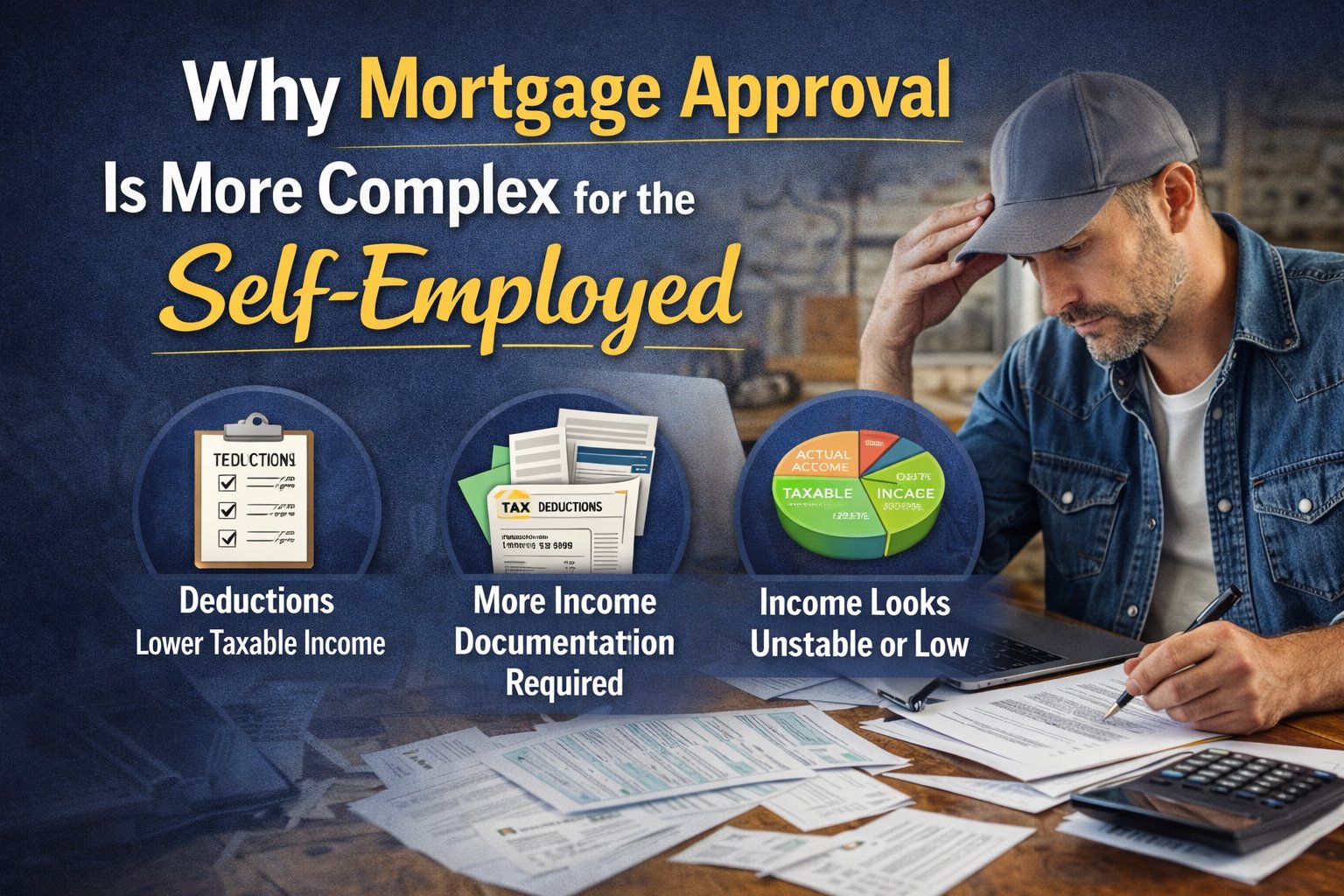
Before we dive into loan types, let’s briefly explore why this process can be trickier for self-employed individuals.
When you work a traditional job, lenders verify your income using familiar documents like W-2s and consistent pay stubs. With self-employment, especially if you claim business deductions, your taxable income may look low even as your actual cash flow is strong. Lenders therefore often require more documentation, like tax returns, bank statements, profit-and-loss statements, and other proof of sustained earnings.
This doesn’t mean self-employed borrowers can’t get a mortgage — it just means you’ll need to understand how lenders evaluate income and which loan products are built for your situation.
1. Conventional Loans (With Proper Documentation)
Conventional mortgages are offered by banks or lenders and conform to guidelines set by Fannie Mae and Freddie Mac. These are often the most competitive loan products with lower interest rates — if you can qualify.
For self-employed borrowers, this typically means providing:
- Two years of tax returns (personal and business), including all schedules.
- A solid credit score (usually 620+ — but higher scores get better terms).
- Stable income with consistent or rising earnings.
- Debt-to-income (DTI) ratios in acceptable ranges.
If your self-employment is recent or your taxable income appears artificially low due to deductions, conventional underwriting might hold you back. However, if you can document income well and your finances are clean, conventional loans usually deliver the best rates and terms.
2. Bank Statement Loans — A Great Alternative
Bank statement loans are rapidly becoming one of the most popular options for self-employed borrowers. Instead of relying on tax returns or W-2s, lenders review your 12–24 months of personal or business bank statements to determine your income based on actual deposits.
This is especially valuable for:
- Business owners who genuinely earn well but show low taxable income due to deductions.
- Freelancers whose income fluctuates monthly.
- Gig-workers and consultants whose full income isn’t reflected on tax returns.
Pros:
✔ Shows real cash flow
✔ Helps applicants with significant tax deductions
✔ Available through many non-QM lenders
Cons:
✖ May require a higher down payment than conventional loans
✖ Typically stricter credit and reserve requirements
When reviewing bank-statement loans, underwriters calculate a borrower’s qualifying income by averaging deposits and applying expense factors to approximate business costs. It’s a more flexible method that can unlock mortgage approval when traditional paths fail.
3. Non-Qualified Mortgage (Non-QM) Loans
Non-QM loans are mortgage products that don’t follow the strict underwriting rules of standard bank mortgage programs. These loans are designed for borrowers whose financial profiles don’t fit neatly into conventional boxes — including the self-employed.
Here’s what makes Non-QM loans attractive:
- They can accept income verification through profit-and-loss (P&L) statements, bank statements, or other alternative docs.
- Some programs don’t require traditional DTI calculations.
- They’re flexible about credit histories and business income variations.
Non-QM loans typically carry higher rates and might require larger down payments, but they can be ideal bridges for borrowers close to qualifying but missing a traditional qualification metric.
4. Government-Backed Loans
Several government-guaranteed mortgage programs offer flexibility for self-employed borrowers:
FHA Loans
- Backed by the Federal Housing Administration, these allow smaller down payments (as low as 3.5%) and more lenient credit requirements.
- Still require income documentation, but eligibility can be easier than conventional loans.
VA Loans
- Available to eligible veterans and active-duty military members.
- Offer zero down payment, no private mortgage insurance (PMI), and relatively flexible underwriting.
- Self-employed veterans still need to prove consistent income.
USDA Loans
- Designed for homebuyers in eligible rural areas.
- Offer 100% financing and lower mortgage insurance costs.
- Self-employed borrowers must meet income requirements and show stability.
Each of these options has specific eligibility criteria, but they can be powerful tools when traditional loans aren’t the best fit — especially for first-time buyers or those with limited down payment funds.
5. Asset-Based and Portfolio Loans
If you have significant assets but irregular income, certain niche loan programs might allow you to qualify based on your liquid assets or unique financial picture rather than income alone. These include:
- Asset depletion mortgages — qualify by converting assets into imputed monthly income.
- Portfolio loans — held by lenders on their books, offering customized underwriting.
These solutions are less common but can be excellent for high-net-worth self-employed individuals.
Tips to Strengthen Your Mortgage Application
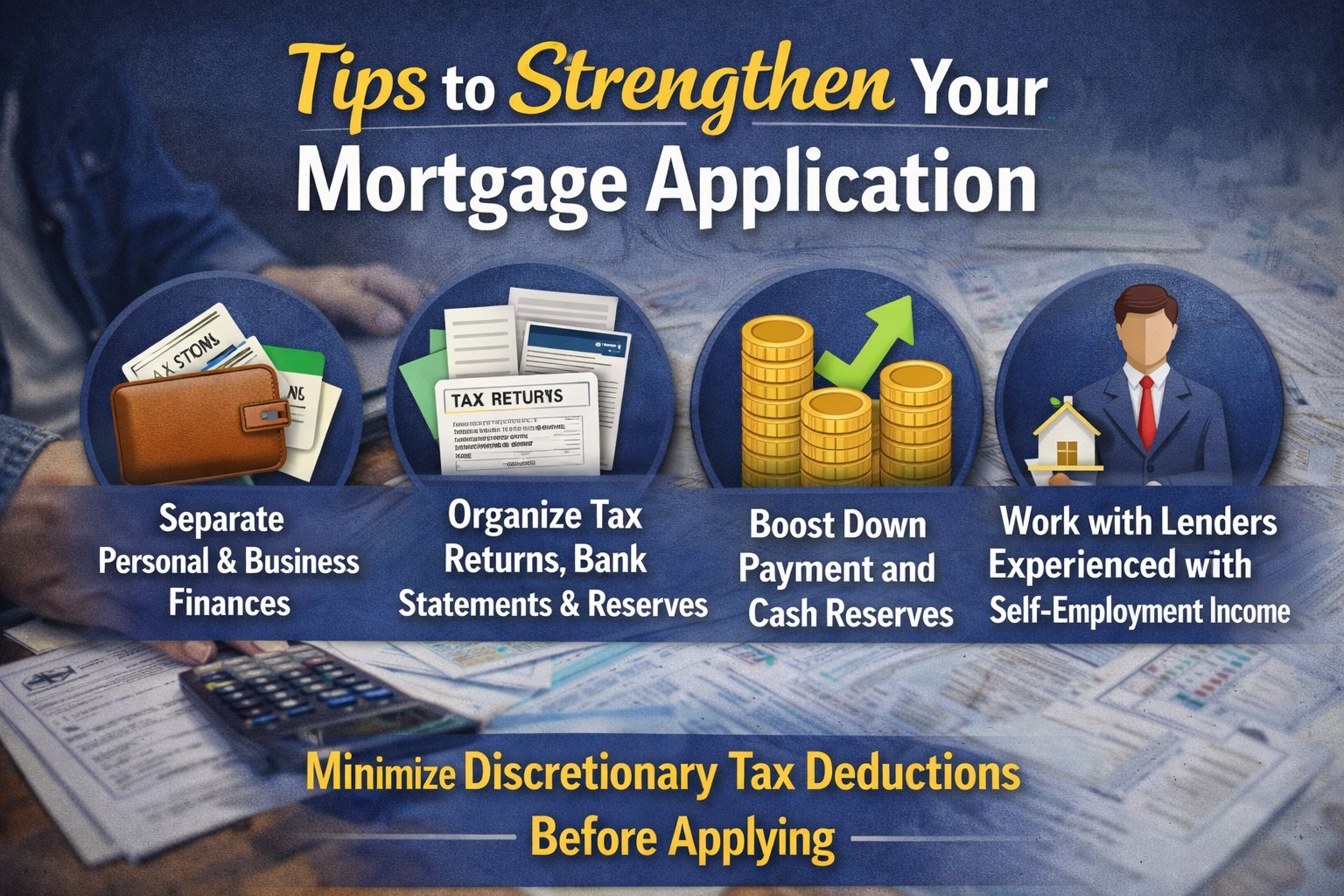
Regardless of the loan type you pursue, self-employed borrowers can improve their chances of approval by:
✅ Separating personal and business finances
✅ Organizing tax returns, bank statements, and financial records early
✅ Increasing cash reserves for down payment and reserves
✅ Working with lenders experienced in self-employment income
✅ Minimizing discretionary tax deductions in the year before applying
Conclusion
Being self-employed shouldn’t stop you from owning a home in Indiana — it just means the mortgage process looks a bit different. With the right loan type and preparation strategy, entrepreneurs, freelancers, and independent professionals can confidently navigate the path to homeownership.
From conventional and government-backed options to bank statement and non-QM loans, there are viable mortgage solutions tailored to your financial reality. Seek out an experienced lender who understands self-employment income models — that’s often the single biggest factor in getting the right loan and rate.
If you’re ready to start your homebuying journey, begin exploring options now — your dream home in Indiana might be closer than you think.